Showing posts with label Europe. Show all posts

Saturday, May 1, 2010

Prague travel

Prague is a well- known old city of Europe that is a host to many tourists all round the year. The aura of the place speaks for itself. Prague is the capital of Czech Republic whose traditional and archaic European ambience is too appealing than ever imagined. Czech is deemed to be the heart of Europe and ahs a population of more than ten million people out of
which 1.3 million are nestled peacefully in the city of Prague.


The Sites Worth Gazing

The Charles Bridge at Prague is a host to many visitors all round the year. This bridge was completed and made public in 1400. It displays grotesque architecture and river views that keep the visitors engaged especially during the summer season. There is also the eminent Wenceslas Square hat is deemed to be the heart of Prague and that grounds some of
the most wonderful restaurants, shops and pubs in Prague. The Old Town center is also a place worth visiting in Prague. The center has on parade some of the marvelous historical sites like the Old town Hall and the Astronomical clock where the visitors get to see the land from the 60 meter elevated tower.

Getting around in Prague is quite simple and convenient. Besides the natural beauty that the place is blessed with, the human technology does not score less. There are trams, metros and buses to explore the charismatic place.

Prague is the land of wonderful museums. There is the National Technical Museum, which puts to display old cars, bikes, planes, trains, cameras, watches and so forth. The best part is the museum itself that is a historical building of 1930's. The Mozart Museum is worth appreciating. The music lovers can have a gala time here for the place offers historical music scores, letters and musical instruments that are exclusive and great to enjoy. Specifically for the artists is meant the Museum of Decorative Arts that presents Czech porcelain, crystal and wood -carvings. Not to overlook is the Wax Museum that has proved its worth across the globe. Apart from these there are many good museums and art galleries that are evenly spread across the city.

Pargue also has some of the magnificent
castles like the Karlstejn Castle that was redesigned in 19th century and which is one of the most photogenic castles known so far. Close to the castle place, are sold exotic Bohemia crystals that the tourists often love to take back home. The Konopiste Castle is known for its French style architecture from 13th century. It is located about 44 kilometers southeast of Prague and is thrown open for visitors from May to August. The Krivolat is a 13th century castle that boasts a prison, torture chambers and one of the biggest non-church Gothic Halls in the Czech Republic. Prague is an ideal place for all the music devotees for they can relish the classical concerts at the Sate Opera and at the Rudolfinum or the Municipal House. The Prague Autumn Festival is a big music event that offers lots of classical concerts and music. The Prague Spring festival is famous all over Europe. It is a liked cultural event that goes on from 12th May to 3rd of June every year.

The nightlife of Prague is thrilling and active with music in the air and loads of pubs, discos and bars cuddled in the city. Besides these there are many other attractions that make Prague a perfect holiday destination.


Wednesday, April 28, 2010

PARIS: THE MOST VISITED CITY IN THE WORLD

Paris is the capital and primate city of France. It is situated on the river Seine, in northern France, at the heart of the Île-de-France region (or Paris Region, French: Région parisienne). Paris is the most visited city in the world with over 30 million visitors per year. Today Paris is a leading influence in fashion, gastronomy and the arts and its accumulated cultural wealth of museums, monuments and architecture makes it an attraction for visitors all over the world. The Eiffel tower is Paris' most famous monument. There is also the Louvre Paris' most famous museum and and the Mona Lisa described in the book that most people read the da vinci code. And also Jardin du Luxembourg, the well known and beautiful park.
Paris, also known as the City of Light, is the world's most popular city destination. Paris is the second-largest city in Western Europe, and possibly the city with the most things to see. While there are many must-see places in Paris, make sure you spend at least a day strolling off the beaten path, as this is the only way to discover the real Paris: a lively cosmopolitan but undeniably French city.
The center of Paris is divided in 20 arrondissements in a sort of spiral with the first arrondissement in the middle and the higher numbers on the outer circle. Most of the arrondissements have their own characteristics.
Sure and shortly, that Paris has more familiar landmarks than any other city in the world. As a result, first-time visitors often arrive in the French capital with all sorts of expectations: of grand vistas, of intellectuals discussing weighty matters in cafés, of romance along the Seine, of naughty nightclub revues, of rude people who won’t speak English. If you look hard enough, you can probably find all of those. But another approach is to set aside the preconceptions of Paris and to explore the city’s avenues and backstreets as if the tip of the Eiffel Tower or the spire of Notre Dame wasn’t about to pop into view at any moment.


Most attractions in Paris are:
Eiffel Tower
Notre-Dame Cathedral
Arc de Triomphe
Louvre
Sacré-Coeur
Champs-Elysées
Centre Pompidou
La Défense
Jardin du Luxembourg
Place de la Concorde
Orsay Museum
Place des Vosges
Sainte-Chapelle
Opéra Garnier
Pont Neuf
Panthéon
Hôtel des Invalides
Jardin des Tuileries
and more.....

Friday, April 23, 2010

MALTA: SPEND ALL YEAR AROUND HOLIDAY

Malta is a group of islands in the heart of the Mediterranean, just below Sicily (Italy). It's about 90 kilometres south of Sicily and 290 kilometres north of the North African coastline. The three main islands are Malta, Gozo and Comino, which attract a large number of visitors each year, who often return to spend their Malta holidays. Many toursists visit the island of Malta for its rich history and culture but most of all for its sunny and warm weather and great resorts to spend your holidays in Malta.
Unsurprisingly, you will find influences from both sides of the Mediterranean; no more so than in the languages spoken here. The two official languages are English and Maltese. English is widely spoken, as a result of the island's history as a British colony since the mid-1850s. And, there is still a strong link to the UK today (they even drive on the left and use UK style 3-pin plugs, so no need to bring an adapter with you!)  It's, therefore, no surprise that British holidaymakers are made to feel extremely welcome here, and you'll find yourself returning again and again.
The island has over 7,000 years of history - including a fascinating pre-history with stone-age monuments available and accessible year-round, as well as cave complexes and fine natural landscapes. In addition, the island has been attractive to waves of invaders and settlers over time, each group leaving it's indelible mark on the architecture and infrastructure.Investment in tourism in recent years has been considerable, and visitors can expect top-quality year-round accommodation, first class dining experiences (including myriad fish specialities) improved tourism infrastructure and many new entertainment venues and state-of -the-art night clubs for those looking for night life.
Malta offers visitors warm summers and mild winters. But of course, the summer season will always be the most popular time to go, and here, Malta has worked hard to develop family-friendly facilities and attractive discounts. For those looking to enjoy a quieter break, the sister island of Gozo offers a serene, unspoilt atmosphere with friendly hotels and plenty of walking, bird watching and sailing opportunities.
Sightseeing on Malta's islands offers a rich and rewarding tapestry. As well as beautiful island beaches to enjoy, there is much else to see and do. The town of Valetta is a jewel, with it's famous St John's Co-Cathedral (Caravaggio's painting of St. John the Baptist is a major highlight) and the inlaid tombstones covering the Cathedral floor. Also in Valletta, a dramatic presentation called the Malta Experience offers a complete overview of the history of Malta. This can be seen at the finely restored Mediterranean Conference Centre at St. Elmo's Bastion - a building originally created by the Knight of St John in the 16th Century.
Days out for families might include a visit to the Toy Museum in Valetta which has three floors of Maltese and international toys dating back to the 1950s, or perhaps the Playmobil Funpark which is the second largest Playmobil factory in the world is located here in Malta - a must for children of all ages. Or perhaps the Splash & Fun Park which is a great place to take the children on a hot summer day where they can swim and use the water slides to use up all their energy. At the Splash & Fun Park there is also a large whirlpool where adults can relax and unwind. Also on the list might be the Mediterraneo Marine Park, where children will be able to enjoy learning about sea animals by watching Black Sea Dolphin or South American Sea Lion shows, or Popeye Village at Sweethaven, which is the actual set of the 1980s musical of which starred Robin Williams.


Friday, April 2, 2010

LONDON, THE CAPITAL CITY OF ENGLAND

As the capital city of England, it is hardly surprising that there is much to see, do and experience in London. With millions of residents packed into this vibrant cultural melting pot, London is always bustling with activity, regardless of the day of the week or the month. Before you arrive there, it is worth making a list of the what you want to see and do, so that you don't miss out on any of the highlights.
There is so much on offer in this vibrant city that you probably will not have time to take in everything; fortunately though, a lot of the most popular sights are located quite near to each other. The Tower of London, the Houses Of Parliament, and Westminter Abbey are all not to be missed. You might want to consider taking them as part of a guided tour, as learning a little about their histories will give you an even better appreciation of them.
Depending on the time of year, catch a sporting event. London has some of best stadiums in the whole world, and five Premier League football (or soccer if you prefer) teams, including Arsenal and Chelsea, who have genuine football superstars in their teams. If English football is not your scene not to worry, check out a rugby game or world class tennis at Queens and Wimbledon during June and July.
As for getting around, remember, they drive on the left side of the road In England. If you rent a car, ask the agency for a map. If you are only going to be in London for a day or so, it might be easier to go by way of taxi. One thing that always stands out in pictures of London is the double-decker bus. They tower over traffic and are as reliable as public transportation can be. Take a ride just for the heck of it. Using the underground train system is probably the quickest way to get about though; it is so extensive that you can literally use it to get to anywhere in the whole of London.
Also, be sure to find time for the House of Lords, the House of Commons, and the accompanying clock tower. You have probably seen the clock tower, called Big Ben, on TV, and it is even more impressive when you see it in person. It has four 23-foot faces that light up at night. The minute hands alone are 14 feet long. It is not open for public tours, but standing back far enough to see it is a rewarding view.
There are various palaces and historical buildings spread around the city. The Queen of England lives in the most famous of all them, which is called Buckingham Palace. The changing of the guard outside is a sight to see. Tourists will gather long before the appointed time just to see the grand guards in their world famous red and black uniforms. The hat itself is legendary. 

Text source: Readbud.

Saturday, March 27, 2010

ISTANBUL: THE MOST INSPIRING CITY IN TURKEY

 At the crossroads between east and west, Turkey has always been a battleground between forces from all directions. Besides Russia, it's the only country two have both Asian and European territory. It's culture is diverse, containing flavours from Central Asia, the Middle East and the Mediterranean. It's this diversity, along with the natural and historical diversity of the country, that makes it such a popular place with travelers.
Turkey might be the world’s most contested country. Its landscape is dotted with battlegrounds, ruined castles and the palaces of great empires. This is the land where Alexander the Great slashed the Gordion Knot, where Achilles battled the Trojans in Homer’s Iliad, and where the Ottoman Empire fought battles that would shape the world. History buffs can immerse themselves in marvels and mementos stretching back to the dawn of civilisation.
Since Turkey is the last piece of the large Ottoman Empire that dominated much of  North Africa, the Middle East, and southeastern Europe, its  geographical position has had an essential effect in Turkish history.
Turkey officially known as the Republic of Turkey is situated in the northern hemisphere in which the two continents, Europe and Asia join. The majority of  its territory stretches out over the Anatolian peninsula, while the rest lies on the Thrace that is the edge of the Balkan peninsula. Three sides of the country is surrounded by sea; the Mediterranean Sea is to the south; the Aegean Sea and Archipelago are to the west; and the Black Sea is also to the north. And the surrounding countries are Bulgaria, Greece, Armenia, Georgia, Azerbaijan, Iraq, Syria and Iran.
There are many historical and wonder city in Turkey such as Ankara, the capital city of Turkey, Izmir: the city on the bay, Ephesus: the wonder of world, and Istanbul, the city of the world's desire, and so on.

Ankara: The Founding Father

Ephesus: The Wonder of The World


Istanbul: The Inspiring City in The World


ISTANBUL: THE MOST INSPIRING CITY IN THE WORLD


İstanbul may no longer be the capital of Turkey, however it remains the economic and cultural powerhouse of the country. It's historic landmarks links it with its Ottoman past, while it's young population has firm course set towards the future. Most tourists spend a good portion of their time in the area of Sultanahmet, which contains Topkapı Palace, Aya Sofia (Hagia Sophia) and the Sultanahmet Camii (the Blue Mosque). However, don't miss many of the other interesting areas of the city, such as Beyoğlu, Beşıktas and Ortaköy.
The city’s over-abundance of important historic buildings and exciting new art galleries and museums provides visitors with more than enough to see during the day, but it’s at night that the place swings into high-velocity, mega-stylish action. Locals are flocking to see and be seen at an ever-growing array of bars, clubs and restaurants, bringing with them an infectious sense of joie de vivre and a discerning ability to judge these places on their standard of service, drinks, music and food as well as their position in the what’s-hot-and-what’s-not stakes.
That’s not to say that the locals are turning their backs on much-loved city institutions such as the rakı-soaked meyhane (tavern) or tranquil çay bahçesi (tea garden), because they wouldn’t dream of doing anything so foolish. They know, after all, that such institutions are one of the reasons that their home is – and always has been – rightfully dubbed the ‘City of the World’s Desire’.

Istanbul is hot. 
These days, there are more happening restaurants, bars, galleries and clubs around town than there are exquisite Ottoman mosques (and that’s a lot). The international fashion and design press have been talking up İstanbul ad nauseam, but the most significant thing about the accolade ‘World’s Hippest City’ is that İstanbullus themselves have come believe it. The creeping sense of decrepitude that had fallen like a pall over their once-all-powerful home town has vanished, replaced by a sense of energy and innovation not seen since the days of Süleyman the Magnificent.
With its geographic position and thousands of years’ cultural heritage, İstanbul has a priviliged speciality among the metropolises of the world. By generating a creative energy, its juvenile and dynamic population has been making İstanbul, the mirror of Turkey, one of the most dynamic cities in the world. The cultural consciousness that particularly improved during the last twenty years is reflected upon its cultural life, too.
Over the years, Istanbul has gained a quality of being a magnetic field, a cultural and artistic centre not only for those living in Istanbul but also for all of the world’s people. The 21st Century will be the one of metropolises. Reviving the identities ,imroving their cultural heritage and sharing what they accumulated, metropolises have been forming the global culture.
By way of sharing their cultural accumulations, metropolitan people have been knowledgeable about and known each other better . The inclusion of cultures in the daily life and spreading out all sections of societies has been more important day by day. Metropolitan development has been succeeded by the help of  cultural change and the fact that the consciousness of  being among one of those living in Metropolises will go up the desired level. Therefore, it is required that both the administrations and non-governmental organizations should be active, and benefit from professional sources of information and experiences. Istanbul has become 2010 European capital of culture and Europe will discover the roots of its culture in Istanbul and take a noteworthy step. What’s more,  Istanbul’s becoming succesful as a Europen capital of culture will be obtained by Istanbul people’s taking this project up seriosly and supporting it with a noticeable participation.

Picture source: http://www.travel-earth.com/turkey

Sunday, December 27, 2009

Netherland - Land of Most Beautiful Flowers and Windmills

The Netherlands, on the coast of the North Sea, is twice the size of New Jersey. Part of the great plain of north and west Europe, the Holland has maximum dimensions of 190 by 160 mi (360 by 257 km) and is low and flat except in Limburg in the southeast, where whatever hills rise up to 322 m (1056 ft). About half the country's area is below seafaring level, making the famous Dutch dikes a requisite for the use of such of the land. Reclamation of land from the seafaring through dikes has continued through recent times. All drainage reaches the North Sea, and the principal rivers—Rhine, Maas (Meuse), and Schelde—have their sources right the country.

clip_image001

After centuries of foreign rules by the Romans, Franks, Burgunds, Habsburgs, and Spaniards in 1648 the Dutch Republic became a free and sovereign state. During the 17th century, also called the 'Golden Age', the Republic became increasingly prosperous and a major colonial power, thanks largely to the Dutch East Bharat Company (VOC). In 1815, the northern and southern Holland – today's Holland and Belgique – were combined to form the Kingdom of the Netherlands. In 1830 Belgique seceded and formed a removed kingdom. The Holland remained neutral in World War I but was invaded in World War II by Germany in May 1940 and filled for fivesome years.Today the Holland is a modern, industrial nation and the ordinal largest exporter of food. The country was a origination member of NATO and the EU, and participated in the launching of the Euro in 1999

clip_image002
clip_image003
clip_image004
clip_image005
clip_image006
clip_image007
clip_image008
clip_image009
clip_image010
clip_image011
clip_image012
clip_image013
clip_image014
clip_image015
clip_image016
clip_image017
clip_image018
clip_image019
clip_image020
clip_image021
clip_image022
clip_image023
clip_image024
clip_image025
clip_image026
clip_image027
clip_image028
clip_image029
clip_image030
clip_image031
clip_image032

Friday, December 11, 2009

Swiss Alps

clip_image013
The Swiss Alps (German: Schweizer Alpen, French: Alpes suisses, Italian: Alpi svizzere, Romansh: Alps svizras) are the central portion of the Alps mountain range that lies within Switzerland. Because of their central position they are also known as the Central Alps.
The highest summit in the Swiss Alps is the Dufourspitze, at 4,634 metres (15,202 ft) near the Swiss-Italian border. The highest mountain which lies entirely on Swiss territory is the Dom, at 4,545 metres (14,911 ft). Other main summits can be found in the list of mountains of Switzerland.

clip_image001
Mont Dolent, Mont Blanc

Introduction

The Alps cover 61% of Switzerland's surface area (41,285 km²) thus making her the second most alpine country after Austria. Despite the fact that Switzerland covers only 13.2% of the Alps total area (190,600 km²), many alpine four-thousanders (48 of 82) are located in the Swiss Alps and almost the totality of the other are within 20 km of the country's border. The glaciers in the Swiss Alps cover an area of 1230 km² (3% of the Swiss territory), this represent 44% of the total glaciated area in the Alps (2800 km²).

Geography

The Swiss Alps are situated south of the Swiss plateau and north of the national border. The countries with which Switzerland shares mountain ranges of the Alps are (from west to east): France, Italy, Austria and Liechtenstein.
Subdivision
Like the Alps the Swiss Alps can be divided into two main parts, the Western Alps and Eastern Alps, whose division is along the Rhine from the lake Bodensee to the Splügen Pass (in Graubünden).

Western Alps

clip_image002

Map of the western Swiss Alps
From west to east, south of Rhône and Rhine:
  • Chablais Alps*: Canton of Valais, separated from the Mont Blanc Massif by the Arve, the Dents du Midi are the highest summits.
  • Graian Alps (Mont Blanc Massif): Canton of Valais, separated from the Pennine Alps by the Col Ferret. The Aiguille d'Argentière is the highest summit on the Swiss side.
  • Pennine Alps (Valais Alps): Canton of Valais, separated from the Lepontine Alps by the Simplon Pass, contains the highest Swiss mountains, the Dufourspitze in the Monte Rosa group, the Dom, the Weisshorn and the famous Matterhorn (38 summits over 4000 m).
  • Lepontine Alps: Cantons of Valais, Ticino, Graubünden, separated from the Oberhalbstein Range by the Splügen Pass, contains the St. Gotthard Pass.
From west to east, north of Rhône and Rhine:
  • Bernese Alps*: Cantons of Bern,Valais, Vaud, Fribourg, separated from the Urner Alps by the Grimsel Pass, contains the Jungfrau and the north face of Eiger (9 summits over 4000 m).
  • Urner Alps*: Cantons of Uri, Bern, Valais, Lucerne, Obwalden, Nidwalden, separated from the Glarus Alps by the Reuss River.
  • Glarus Alps*: Cantons of Uri, Glarus, Graubünden, separated from the Appenzell Alps by the Seeztal.
  • Appenzell Alps*: Cantons of Appenzell Innerrhoden, Appenzell Ausserrhoden, St. Gallen.

Eastern Alps

clip_image003

Map of the eastern Swiss Alps
All following mountain ranges are situated in Graubünden, they are part of the Central Eastern Alps except the Ortler Alps which belong to the Southern Limestone Alps.
From west to east, north of Mera and Inn river:
  • Oberhalbstein Range
  • Plessur Range*
  • Albula Range
  • Rätikon*
  • Silvretta*
  • Samnaun Alps*
From west to east, south of Mera and Inn river:
  • Bregaglia Range
  • Bernina Range (contains the easternmost summit over 4000 m: the Piz Bernina)
  • Livigno Range
  • Ortler Alps*
  • Sesvenna Range

Travel and tourism

clip_image005

Despite the tourism industry, Zermatt has retained much of its traditional character
clip_image006

In some large resorts, like Cran-Montana, the tourism industry deeply affected the landscape
Tourism in the Swiss Alps began with the first ascents of the main peaks of the Alps (Jungfrau in 1811, Piz Bernina in 1850, Dufourspitze in 1855, Matterhorn in 1856, Dom in 1858, Weisshorn in 1861) mostly by British mountain climbers accompanied by the local guides. The construction of facilities for tourists started in the mid nineteenth century with the building of hotels and mountain huts (creation of the Swiss Alpine Club in 1863) and the opening of mountain train lines (Mount Rigi in 1873, Gornergrat in 1898). 1912 was the year of inauguration of the Jungfraubahn which leads to the highest train station in Europe, the Jungfraujoch.

Summer tourism

Switzerland enjoys a network of 62,000 km well-maintained trails among which 23,000 are located in mountainous areas. Many mountains attract a large number of alpinists from around the world, especially the 4000 metres summits and the great north faces. Many tourists also love to take nature hike and photographers love the look of the Swiss Alps. The large winter resorts are also the most appreciated destinations in summer.

Winter tourism

The major destinations for skiing and other winter sports are located in Valais, Bernese Oberland and Graubünden. The most visited places are:
  • Davos
  • Grindelwald
  • St. Moritz
  • Zermatt (all year round ski resort)

Other large winter resorts are:

  • Adelboden
  • Crans Montana
  • Engelberg
  • Flims
  • Gstaad
  • Klosters
  • Saas Fee (all year round ski resort)
  • Verbier
  • Wengen

Transportation

clip_image001[4]

The Glacier Express on the Landwasser Viaduct, Albula Range
The Swiss Alps and Switzerland enjoy an extensive transportation network. Every mountain village can be reached by public transport, the main companies are:
  • Federal Railway
  • Rhaetian Railway
  • Matterhorn Gotthard Bahn
  • Golden Pass
  • PostBus
Most of mountain regions are within 3 hours of travel from Switzerland’s main cities and their respective airport. The Engadin Valley in Graubünden is usually 4 to 6 hours away from the large cities but the train travel itself with the famed Glacier Express or Bernina Express is considered as an attraction. The Samedan Airport near St. Moritz at an altitude of 1,707 metres (5,600 ft) is the highest in Europe.
The crossing of the Alps is a key issue at national and international levels, as the European continent is sharply divided by them. Since the beginnings of industrialization, Switzerland constantly had to improve its transalpine network. It began in 1882, by the Gotthard Rail Tunnel and was followed in 1906 by the Simplon Tunnel and more recently, in 2007, by the Lötschberg Base Tunnel. The 57 km long Gotthard Base Tunnel is slated to be open in 2016, it will finally provide a direct flat rail link through the Alps.

Gallery

clip_image001[6] clip_image002

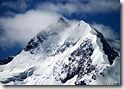
Jungfrau, Bernese Alps Weissmies from Hohsaas, Pennine Alps
clip_image003[4] clip_image004
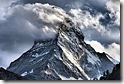
The north face of Eiger, Bernese Alps Matterhorn, Pennine Alps
clip_image005[4]
Aiguille d'Argentière above the Saleina Glacier, Mont Blanc Massif
clip_image006[4] clip_image007[4]
Ebenalp, Appenzell Alps North of Finsteraarhorn, Bernese Alps
clip_image008[4] clip_image009
Unteraar Glacier, Bernese Alps Piz Bernina, Bernina Range
clip_image012 clip_image015
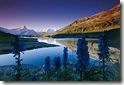
Lauterbrunnental, Bernese Alps Bachalpsee, Bernese Alps
clip_image016 clip_image017

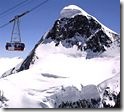
Lötschental, Bernese Alps The Klein Matterhorn cable car, Pennine Alps
clip_image020 clip_image021
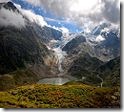
The Grand Combin, Pennine Alps Stein Glacier from Susten Pass, Urner Alps
clip_image022 clip_image023

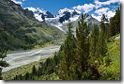
Mont Dolent, Mont Blanc Massif Val Roseg, Bernina Range