Showing posts with label Spain. Show all posts

Thursday, September 15, 2011

Celebrations in Spain


Carnival

February is the month, to witness the crazy carnivals. It is celebrated in different parts of the country, which follow different ways to make these carnivals enjoyable. It's the best time, where many people socialize and get together, with an intention of having fun. Canary Islands, Cadiz and Stiges are the cities, which conduct one of the most amazing and wild carnivals. A lot of people are dressed in unusual and beautiful costumes, and sing and dance all through the night. The streets are occupied with many people as they watch and participate in many events and parties. The carnival in Spain is filled with many wonderful and interesting events such as, beauty pageants, music shows and various forms of dances. Every citizen of Spain actively participate in these carnivals. In case, these competitions do not interest you, then you can always book your villas and throw a great party or instead head to open air parties. Carnivals, is a reflection of art, where many artistes get a chance to display their skills. This fun filled spectacle takes place just before Lent, which involves 40 days of fasting and as per old traditions no parties were permitted. Origin of carnival is under many speculations, but masquerading and parades were observed in Italy and soon spread to other European countries.


San Fermin - Running of the Bulls

San Fermin is among the popularly celebrated events in Spain. Saint Fermin was dragged by the bulls on the streets of Pampola, which is an event of great significance. The celebrations take place from 6th July from noon and goes on till 14th July. The event is inaugurated with the launch of a rocket, an act popularly known as Chupinazo. As the day proceeds, the city council members, parade from City Hall to the Saint Fermin chapel, while many young people block the streets by performing various art forms. Each day involves certain events for which this festival is famous. The event of bulls running begins at 8 in the morning, when the firecracker is launched, indicating the release of the bulls. This event takes place from the 7th to 14th July. After the bull run, the bulls come back to the bullring of Pamplona, where they are killed in the bullfight. This is the most dangerous and yet intriguing part. Many bulls get killed and people or bullfighters who participate in this event also pay with their lives. Irrespective of the bull run and fights, there are many sports such as stone lifting, hay bale lifting and wood cutting are organized. San Fermin, is among the most awaited events of the year, where many Spanish and even people from all around the world visit to witness the great bullfights.


Easter in Spain
Easter

Easter begins with Palm Sunday (Domingo de Ramos) and comes to end with Easter Monday (Lune de Pascua). A lot of people carry palm leaves and visit the church to get it blessed by the priest. Many churches also organize a parade mark the arrival of Jesus. On easter Sunday, many dummies are made, which are ultimately torn into pieces and thrown into the air. The easter Sunday meal is a special one, as the godfather presents the cake, La Mona to his godchild. These cake come in many shapes and designs, which are served by wine or honey syrup.


Tomato Festival
Tomato Festival

Known as Tomatina, this big tomato fight event takes place in Bunyol. This festival takes place on the last Wednesday of August. Many people from different parts of Spain gather at Bunyol and throw around 240,000 pounds of tomato at each other. The tomatoes are specially grown for this event and are smashed before the fight to avoid injury. Many participants protect themselves by wearing goggles and gloves and continue to fight up to 1 hour.


Some of these celebrations in Spain have attracted many tourists, who visit and enjoy all these wonderful events. Celebrations are one of the factors, that attract people to this destination. However, its great cuisine, enchanting beaches and wonderful culture also pull the attention of many, who wish to become a part this beautiful country.


Thursday, August 19, 2010

Travel Deals Go To Sitges, Spain

Travel Tours To Sitges


Cheap Travel Go To Sitges, Spain

Spain hotels and apartments in Sitges There are also plenty of beachside villas to rent. Today there are scores of seafront rentals available to choose from in a large variety of sizes, from bachelor suites to multiple bedroom properties overlooking the sea. Seafront apartments became part of Sitges infrastructure in the twentieth century, furnishing the small town with many vacation rentals accommodating the growing number of tourists discovering the once-hidden gem. The Marical Palace, the local basilica, and numerous American homes—an emblem of their American owners, who later emigrated to Cuba in the later part of the century—are popular stops.

The coastal community flourished, erecting architectural landmarks that are now the most popular attractions. In the early part of the nineteenth century, a bevy of Spanish artists distinguished the seaside town by settling in and culminating a strong creative community. Though many of the coastal regions in Spain have been overtaken by tourism, Sitges remains distinctly oriented around Spanish culture and history, and the endowment of an active artist community bearing the fruits of this artist-inaugurated town. The numerous seafront apartments, flanking the main beaches in Sitges, are also the district’s claim to fame, and ideal for seeking out some good fun under sunny Spanish skies.

A large number of special events and holidays, and a boatload of festivals catch the eye of many travelers on Sitges vacations. It’s a southeastern Spanish destination boasting many things to do including two miles filled with seventeen beautiful Spain beaches, a scenic landscape, and plenty of Spanish culture. Sitges is Barcelona’s coastal address.

Friday, July 30, 2010

Religius Mezquita Cordoba Travel Packages, Spain


Religius Mezquita Cordoba Travel Packages, Spain
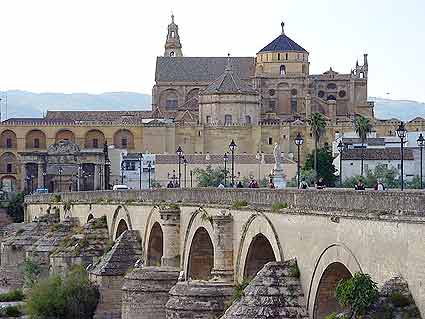
Interestingly the Christians, Following Moorish occupation, Christians led by Fernando III re-conquered the city in 1236. Entrance to the Mihrab (prayer room) makes for a grand display of golden Byzantine mosaics adorned by inscriptions of the Koran. Demonstrating breathtaking architecture within the Mezquita Cordoba, rows of marble pillars and colourful red and white arches give distinctive character to surroundings.

The establishment of a great Mosque reflected this achievement. During this period, Cordoba was one of the most prosperous cities in Europe. Constructed over two centuries, work began on the Mezquita by the Emir of Cordoba, Abd ar-Rahman I in 784 AD. The Muslim invasion of the Cordoba peninsula took place in 711 AD.

However, its significance as a lasting Moorish landmark is the real draw here for many visitors, making it one of many appealing Attractions in Spain. As Spain remains predominantly Catholic, the site is a popular Catholic Church in Spain to visit and is one of many Churches in Spain and Cordoba itself. Turbulent centuries of counter-occupation of the region by Christians and Muslims have led to the site being developed from temple, to Mosque and finally Cathedral by Christian conquerors in the early 13th Century. The site at which the Mezquita (Mosque) remains once stood a Roman temple.

Founded by the Romans, Cordoba developed into a busy port of commerce, shipping many goods including Spanish olives and wine into the heart of its empire. Magnificent and striking the Mezquita Cordoba traces its place in history as an established place of worship as far back as Ancient Rome.

Marida Travel Tours, Spain


Marida Online Travels
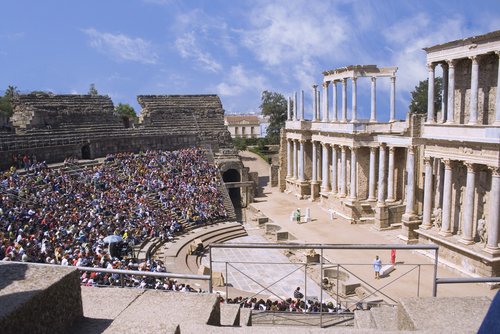
It held the fights between It could hold more than 15,000 people during its use and was designed by the famed architect Agrippa. The Anfiteatro (Amphitheater) is also another famous site at these wonderful Roman ruins in Spain. When you travel here, you can sit in the seats of the Romans who walked before us and enjoy one of the plays that are staged here in June and July. The seating here was based upon one's class in society, with the very wealthy having the prime seats up front and the slaves and the poor citizens being restricted to the back walls.

The stone amphitheater was constructed around 18 BC, and the expansive structure could hold up to 6,000 spectators during its heyday. The Roman Theater is the star of the ruins at Merida Spain. This UNESCO World Heritage Site can only be explored by foot, and it is well worth traveling here to learn about Spain's Roman past. It served as a vital link in the roads connecting Toledo with Lisbon and Salamanca to Seville.

It was founded around 25 BC, and the site was home to the largest Roman strongholds on the Iberian Peninsula. The stronghold of ruins is situated in the Extremadura region of Spain, an autonomous region with the city of Merida as its capital. Often noted as having some of the best examples of Roman ruins in Spain, Merida boasts an amphitheater, temples, and aqueducts, as well as an informative museum on Roman history. Merida Spain is home to an extensive collection of archaeological sites.

Wednesday, December 2, 2009

Spain Tourist Attractions & Must See Places in Spain

A country on the Iberian Peninsula, situated between Europe and Africa and bounding Bay of Biscay, Mediterranean Sea and the Atlantic Ocean, Spain is among the best travel destinations not only for its geographical condition and its results but also for a range of factors such as its own traditions, cuisine, variety of places to see. Spain boasts a rich history and owns historical places. Wide sandy beaches, clear waters are charming. The country offers much more which can be experienced while visiting and enjoying each region.

Among the popular cities and travel destinations of Spain, there are Madrid, Barcelona, Bilboa, Valencia, Seville,Toledo, Granada, Cordoba, .Zaragoza, San Sebastián, Pamplona, Alicante, Cadiz, Andalucia, Malaga, Costa Blanca, Tenerife, Salamanca etc.

Balearic Islands in the Mediterranean and Canary Islands in the Atlantic Ocean off the African coast have worldwide fame as travel destinations and must-see places of Spain.
Madrid is the capital of Spain. It's a city known for bullfighting, fiestas and flamenco dancing, and royal palaces. The top attractions of Madrid are the Royal Palace, Plaza Mayor, Plaza de la Cibeles, Parque del Buen Retiro, Plaza de España, The Prado Museum, Museo Thyssen-Bornemisza, The Archaeological Museum etc. The city offers dance halls, movie houses, music halls, cafes and more. Barcelona is known as a cultural centre owning monuments, historical sites, numerous art galleries and natural resources.The most visited museum is dedicated to one of Spain's most famous names, Pablo Picasso.

The Alhambra, the palace of the last Muslim ruler of Spain, located in Granada is one of Spain's major tourist attractions for exhibiting the Islamic architecture together with Christian and Jewish.The Mezquita in Córdoba is a famous tourist attraction. Tomb of Christopher Columbus in Seville is also visited by travellers. A new science centre and futuristic aquarium named L'Oceanografic aquarium are attractive places of Valencia to see.The historic cities of Cadiz and Malaga are visited by travellers. Moreover, Malaga is a wellknown city due to its being the birthplace of Pablo Picasso and movie idol Antonio Banderas. Guggenheim Museum and Plaza Nueva are the tourist destinations of Bilboa.
Balearic Isles, the three main islands of which are Ibiza, Majorca and Menorca, is an exotic destination. The island of Ibiza is popular with its club scene, weather and beautiful beaches. When clubbing is talked about, it means Ibiza. It has an international fame. Mallorca is the least crowded island among them. Fresh seafood lunches are delicious. Majorca is as popular as Ibiza as a tourist destination.

The Canary Islands, the seven islands in the Atlantic Ocean, of Spain are very popular. These are: El Hierro, Fuerteventura, Gran Canaria, La Gomera, La Palma, Lanzarote, Tenerife. Gran Canaria Canary Islands is like paradise thanks to its numerous beaches, crystal clear waters and water sports. Tenerife is the largest of the Canary Islands and very popular as a tourist destination. Here is the Mount El Teide. Not only water sports but also hiking, climbing and cycling ara available activities.
Among the other travel attractions of Spain, there are Alcázar, Castillo de Santa Bárbara,
La Sagrada Família, Parc Nacional d'Aigüestortes i Estany de Sant Maurici, Doñana National Park, The Basque Country, the Parc Guell, Picasso Museum, Las Ramblas and much more.

Spain's folkloristical traditions are certainly Flamenco and bullfights. Running of Bulls is the most popular event during the Sanfermines in Pamplona. Flamenco is the musical tradition of Spain. As a visitor, for an unforgettable memories it is recommended to visit the country in the season of festivals and fiestas. Spain is a beach lovers paradise with its white sand beaches. Delicious Spanish cuisine and wine must be tasted, too.

Sunday, October 25, 2009

Madrid Travel Guide

This Bahamas Hotel is a Favorite vacation spot

This Bahamas Hotel is a Favorite vacation spot

Madrid is a lively city, meaning that Madrid activities are plentiful and readily available just about any time of the day. And according to just about every Madrid travel guide, the city really heats up at night and the frenzy continues into the wee hours of the morning. No one really knows when the Madrileños sleep. It may be the afternoon siesta that gives them the endurance to keep things going well after sunrise or maybe it's the multitude of fuel filled foods and dishes prepared in one of the thousands of Madrid restaurants.

It's ok to book a room in one of the top Madrid hotels--if only for the memorable experience, but don't count on spending much time in your room. Remember, Madrid truly is one of the best cities to explore in Spain.

Plan several hours to enjoy Madrid activities such as visiting San Nicolas de los Servitas – the oldest church in Madrid. Visit the Victory Arch, the Palacio Real, and the Plaza de las Cibeles and Puerta del Sol- And no Madrid activities list is complete without a visit to a Madrid flea market.

Saturday, October 24, 2009

Spain Travel Guide


Spain is more than bullfights, flamenco dancers and crowded beaches. It's a spectacular and diverse country, the north resembling the rolling, green hills of Ireland and the south giving you a taste of Moroccan landscapes and architecture. Its tremendous history is reflected in its prehistoric cave paintings, Moorish palaces, crumbling castles, Roman ruins, Gothic and Renaissance cathedrals as well as some very�distinctive modern architecture. The uniqueness of Spain lies in the separate kingdoms which made up the original Spanish nation. These regions remain diverse in their language, culture, cuisine and art. They include: Andalucía, Aragon, Asturias, Basque Country, the Balearic Islands, the Canary Islands, Cantabria, Castilla La Mancha, Castilla León, Catalonia, Extremadura, Galicia, La Rioja, Madrid, Murcia, Navarra and Valencia. Areas of interest are not limited to each region, here are some highlights:

Spain can be enjoyable any time of year. The ideal months to visit are May, June and September (April or October in the south). At these times you can rely on excellent weather, yet avoid the heat of July and August.

Friday, October 16, 2009

Travel in Barcelona - Barcelona Resorts

Barcelona Resorts

Barcelona Resorts This city with a rich cultural heritage also boasts a lovely Mediterranean climate. Barcelona is the cosmopolitan capital of Catalonia, incorporating in its modern street grid Roman remains, medieval districts and beautiful examples of 20th-century and avant-garde art. Here you can visit the many museums, such as the Picasso Museum, relax on the stretches of beach, or sample the plentiful seafood dishes accompanied by delicious local wine.

Thursday, October 15, 2009

Alameda Spain Travel


Alameda Spain Travel
Alameda is a town and municipality in the province of Málaga, part of the autonomous community of Andalusia in southern Spain. The municipality is situated approximately 85 km to the city of Málaga. It has a population of approximately 5,000 and the natives are called Alamedanos or Lametanos. The Bandito "El Tempranillo" is buried here.
By ; Wikipedia.com